
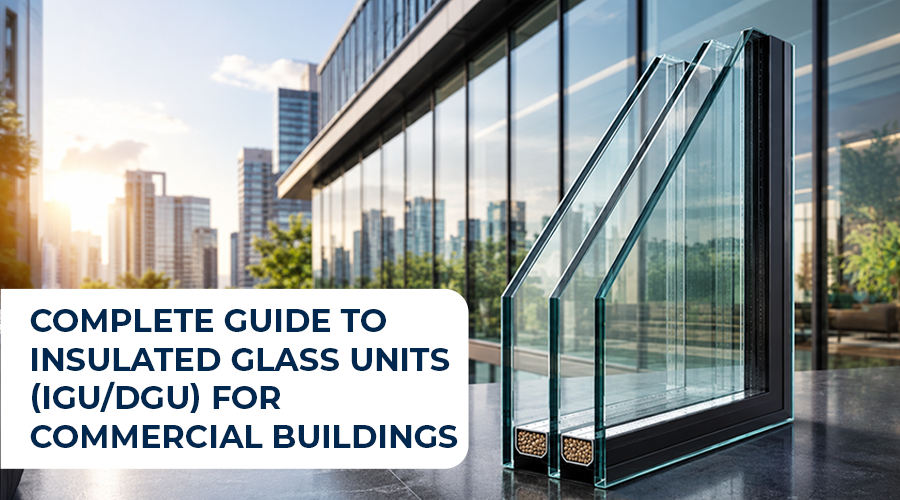
Complete Guide to Insulated Glass Units (IGU/DGU) for Commercial Buildings
Learn how insulated glass units (IGU/DGU) improve energy efficiency, thermal insulation, and acoustic comfort in commercial buildings. Explore their benefits, applications, and how to choose the right insulated glass manufacturer.
Quick Summary
Glass has become an important part of modern commercial architecture, but today's buildings need more than attractive façades. They need glazing that helps manage heat, improves indoor comfort, reduces outside noise, and supports long-term energy efficiency. This is where insulated glass units play an important role.
Table of Contents
- • What are insulated glass units?
- • How does IGU glass actually work?
- • Why commercial projects are moving towards insulated glazing
- • Where IGUs make the biggest difference
- • What to consider before choosing an insulated glass manufacturer
- • Final Thoughts
Introduction
Walk into two office buildings on a warm afternoon and they might look almost identical from the outside.
Both have large glass façades. Both receive plenty of natural light.
Yet one feels comfortable the moment you step inside, while the other feels noticeably warmer even though the air conditioning is running. That difference often has very little to do with the size of the building. It usually comes down to the glazing system that was chosen during the design stage.
Over the years, architects and developers have stopped looking at glass as something that only improves appearance. Today, they're asking different questions.
Will the building stay comfortable during summer?
Can it reduce energy consumption?
Will people working inside be disturbed by traffic noise?
Can the façade perform well for years without compromising aesthetics?
Those questions have made insulated glass units an essential part of commercial construction.
If you're exploring architectural glass solutions for commercial projects, you can learn more about Tufftron's manufacturing capabilities on the Homepage.
What Are Insulated Glass Units?
Most people notice that insulated glass has two panes. What they don't notice is the carefully sealed space between them. That small gap is what changes how the glass performs.
Instead of allowing heat to pass through easily, the sealed cavity slows down heat transfer between the outside and inside of the building.
You'll often hear professionals use different terms such as IGU glass, DGU glass, or double glazed glass.
Although the terminology varies, the idea remains the same. Multiple panes work together as one glazing system, helping buildings become more comfortable and energy efficient than traditional single glazing.
The technology itself isn't complicated.
What matters is how well the unit is manufactured and installed.
Why Commercial Buildings Are Choosing IGUs
Commercial buildings operate very differently from residential homes. An office tower with large glass elevations faces different challenges compared to a house with a few windows.
The cooling system works harder.
Occupancy is higher.
Sunlight enters the building for longer periods during the day.
Those factors influence operating costs year after year. That is one reason insulated glass units are becoming a common choice across offices, hospitals, hotels, educational institutions and retail developments. Rather than solving one problem, they help improve several aspects of building performance at the same time.
Architects appreciate the design flexibility.
Facility managers appreciate lower energy demand.
Occupants simply notice that the building feels more comfortable.
Comfort Isn't Just About Temperature
Ask someone what makes an office comfortable and air conditioning is usually the first answer. In reality, comfort depends on several things working together.
Heat is one.
Noise is another.
Buildings located near busy roads, airports or commercial districts often have to manage constant outside noise. This is where soundproof glass configurations built around insulated glazing become useful.
They help reduce external noise without sacrificing natural daylight. The same glazing system also contributes to better thermal insulation glass, making it easier to maintain indoor temperatures throughout the day.
It's one reason modern commercial glass solutions are designed around performance instead of appearance alone. If you're comparing different glazing options, you may also find this article useful:
Low-E Glass vs Toughened Glass: Which Saves More Energy for Modern Buildings?
Does Every Commercial Building Need Insulated Glass?
Not necessarily. The right glazing depends on the building itself.
A warehouse has different requirements from a corporate office. A hospital has different expectations from a shopping mall.
Climate, building orientation, façade design and energy goals all influence the final specification.
That's why architects rarely choose glass by looking at thickness alone. Instead, they evaluate how the glazing system will perform over the life of the building.
In many projects, DGU glass becomes part of larger facade glass systems that balance daylight, insulation and aesthetics.
Choosing The Right Insulated Glass Manufacturer
A good insulated glass unit is more than two sheets of glass joined together.
Manufacturing quality plays a significant role in long-term performance.
Poor sealing, inconsistent fabrication or incorrect specifications can affect durability and efficiency over time.
Experienced insulated glass manufacturers work closely with architects, consultants and contractors to recommend glazing systems suited to each project rather than offering one standard solution for every building.
Understanding project requirements before manufacturing begins often prevents problems later during installation.
If you'd like to understand more about architectural safety glazing, you can also read: What is Toughened Glass?
Looking Beyond Energy Savings
Energy efficiency usually gets the most attention when people discuss double glazing benefits. It's certainly important. But long after a building is completed, occupants tend to notice something much simpler.
Rooms remain more comfortable.
Meeting spaces stay quieter.
Work areas feel more consistent throughout the day.
Those everyday experiences are difficult to measure on a brochure, but they are often what people remember most about a well-designed commercial building.
According to the International Energy Agency, improving the building envelope remains one of the most effective ways to reduce long-term energy demand.
Final Thoughts
Glass has become one of the defining elements of modern commercial architecture. Today, however, its role goes far beyond appearance.
The right glazing system influences energy use, indoor comfort, acoustic performance and the overall experience of people using the building every day.
Whether you're planning a commercial office, healthcare facility, educational campus or mixed-use development, choosing the right insulated glass units early in the design process can make a lasting difference.
If you're evaluating IGU glass, DGU glass, or other high-performance architectural glazing systems, explore more resources through the Tufftron Blogs.
FAQs
1. What are insulated glass units (IGUs)?
Insulated glass units are glazing systems made of two or more glass panes separated by a sealed air or gas-filled space. They improve thermal insulation, reduce outside noise, and enhance overall building performance.
2. Is IGU glass the same as DGU glass?
In most commercial projects, yes. DGU (Double Glazed Unit) is a type of IGU (Insulated Glass Unit) consisting of two glass panes separated by an insulating spacer.
3. Why are insulated glass units used in commercial buildings?
They help improve indoor comfort, reduce heat transfer, minimise external noise, and contribute to lower energy consumption over the life of the building.
4. What are the main double glazing benefits?
Double glazing helps improve thermal insulation, reduces outside noise, enhances occupant comfort, and can lower heating and cooling costs.
5. Can insulated glass units improve sound insulation?
Yes. Properly designed insulated glass units can significantly reduce outside noise, making them suitable for offices, hotels, hospitals, schools, and buildings located near busy roads.
6. Are insulated glass units suitable for all commercial projects?
Not necessarily. The right glazing system depends on factors such as climate, building orientation, façade design, performance requirements, and project budget.
7. Can Low-E glass be combined with insulated glass units?
Yes. Low-E coatings are commonly used with insulated glass units to improve thermal performance and reduce solar heat gain.
8. How do I choose the right insulated glass manufacturer?
Look for manufacturers with proven fabrication capabilities, quality control standards, technical expertise, and experience in supplying glazing solutions for commercial projects.
9. What industries commonly use IGU glass?
IGU glass is widely used in office buildings, hotels, hospitals, educational institutions, airports, shopping malls, IT parks, and mixed-use commercial developments.
10. How long do insulated glass units last?
When manufactured and installed correctly, high-quality insulated glass units can provide reliable performance for many years, though lifespan depends on installation quality, environmental conditions, and maintenance.